Use words you already recognise
Bring familiar Spanish into a small problem, a description, or a follow-up answer. A clear situation makes those words easier to remember than an isolated list.
Spanish conversation practice built around a purpose
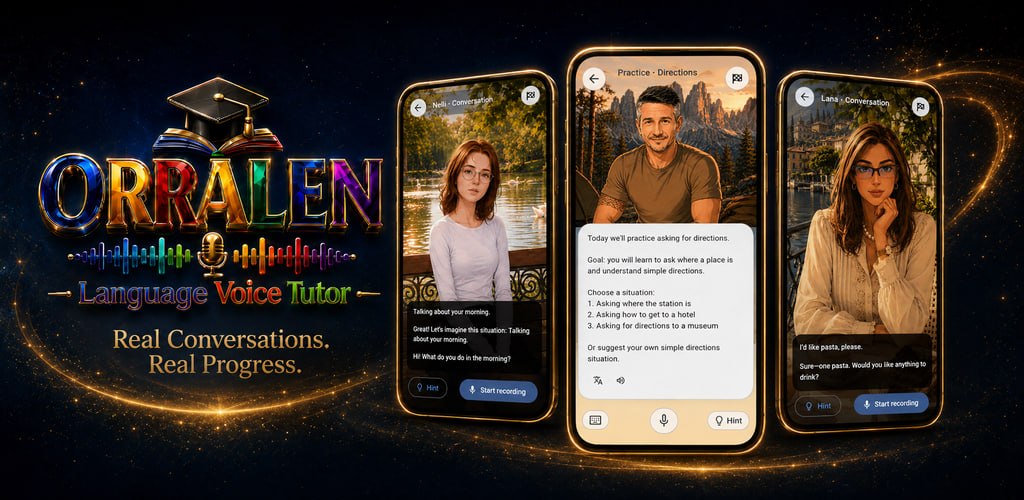
Knowing how a Spanish sentence works is different from choosing it while someone waits for your answer. Language Voice Tutor by Orralen lets you practise speaking Spanish in voice or text conversations that respond to what you say, so you can ask, react, explain and change direction instead of repeating a fixed script.
You may recognise a past tense in a story yet hesitate when someone asks what happened yesterday. Regular Spanish speaking practice helps familiar words come more easily when you need them.
Bring familiar Spanish into a small problem, a description, or a follow-up answer. A clear situation makes those words easier to remember than an isolated list.
Beginners can build reliable question-and-answer patterns. Intermediate learners and students can connect events, express doubt, and add detail when the tutor asks why.
Travellers can practise requests they may need the same day. Workers can prepare updates and polite disagreements. Learners without regular conversation partners can create more chances to speak.
Choose Spanish, your CEFR level, a topic or practical situation, and an AI tutor. Reply by voice or text. Each new question follows the conversation and helps the situation develop naturally.
Be a customer comparing two jackets, a student planning a presentation, or a visitor asking about a local bus. A role makes the words immediately useful.
The AI Spanish tutor can add a new detail, ask for a reason, or offer another option. You practise adapting instead of predicting every line in advance.
Read the corrected sentence and notice the key change. Then continue the topic and try to use that word ending, verb form, or linking word again.
The learner in this Spanish dialogue states a need, answers a size question, and leaves several possible follow-ups about colour, price or fit.
Tutor: Buenas tardes, ¿busca algo en particular?
Estudiante: Sí, necesito una chaqueta ligera para el viaje.
Tutor: ¿Qué talla usa?
Estudiante: Normalmente uso una M.
Try again: «Ayer he comprado una chaqueta.»
Better in this context: «Ayer compré una chaqueta.»
With ayer, compré is the natural choice here for an action that was completed yesterday.
CEFR levels let the same theme grow from a short everyday exchange into a flexible conversation with reasons, alternatives and detail.
Ask and answer about identity, location, prices, food and simple daily needs.
Link short statements about routines, recent events, preferences and immediate plans.
Narrate a sequence, explain why something matters and cope with a change to the original plan.
Explore advantages and drawbacks, soften disagreement, and keep a longer conversation going while explaining your point clearly.
Useful Spanish goes well beyond holidays. Change the people, place and problem so you can practise giving a fresh answer.
Ask whether a museum ticket includes an exhibition, explain a missed connection, or check the last bus back to your accommodation.
Introduce a client call, report what has been completed, or agree who will handle the next task.
Choose a presentation topic, compare two sources, or ask a classmate how they reached a different conclusion.
Order several dishes to share, ask about an ingredient, or explain politely that an item has not arrived.
Compare sizes, ask about a return, describe the item you need, and react when the first option is unavailable.
Invite a friend to an event, suggest a different time, or talk about a family tradition and why you value it.
Open Spanish practice when it suits you instead of searching for a conversation partner and arranging a meeting. This makes it practical to revisit Spanish for ten focused minutes between other tasks.
More than 100 guided lessons give you new topics and clear steps to follow. You can also select Lana, Nelli or David as your AI tutor and decide what kind of conversation you need.
Register and get 7 days of Premium. The Free plan includes one free lesson every day.
One lesson can be enough for a useful routine: finish a situation, note one correction, and try that wording again in tomorrow’s Spanish practice.
Start with a clear situation, then leave enough room to make your own choices.
Choose the level at which you can finish a short exchange with some effort. If every answer is already easy, move up; if you cannot build a basic response, choose a simpler situation or move down.
Yes. Use a service situation for direct requests, then switch to a workplace conversation that asks you to explain, plan, or disagree politely. Each setting uses Spanish differently.
Notice the smallest meaningful change, say or write a new sentence with it, and use it again later in the dialogue. A correction is most useful when it helps you say something new.
Yes. It gives you more time to check accents, word endings and verb choices while the conversation continues from your earlier replies. Use voice when you want to answer more immediately.
You can practise without finding a conversation partner. Choose a topic and AI tutor whenever convenient, then use the guided lessons to keep your sessions varied.
Choose a practical scene, respond at your level, and develop a conversation that asks you to adapt.